This exhibition highlights the wide reach of the AGC in operations outside of the British Isles. As the Administrative Corps of the Army, it and its antecedents had a presence in every theatre of war and operation, dating from the 1660s to the modern day.
As part of Europe, Britain has always been involved with affairs on the continent, and so has the AGC and its antecedents. From the Mounted Military Police (MMP) patrolling the Iberian Peninsula during the Napoleonic Wars, to the management of the influx of conscripted soldiers by corps like the Army Pay Corps (APC), Army Educational Corps (AEC) and Military Police (MP) in The Great War, they have ensured soldiers were paid, educated, and disciplined.
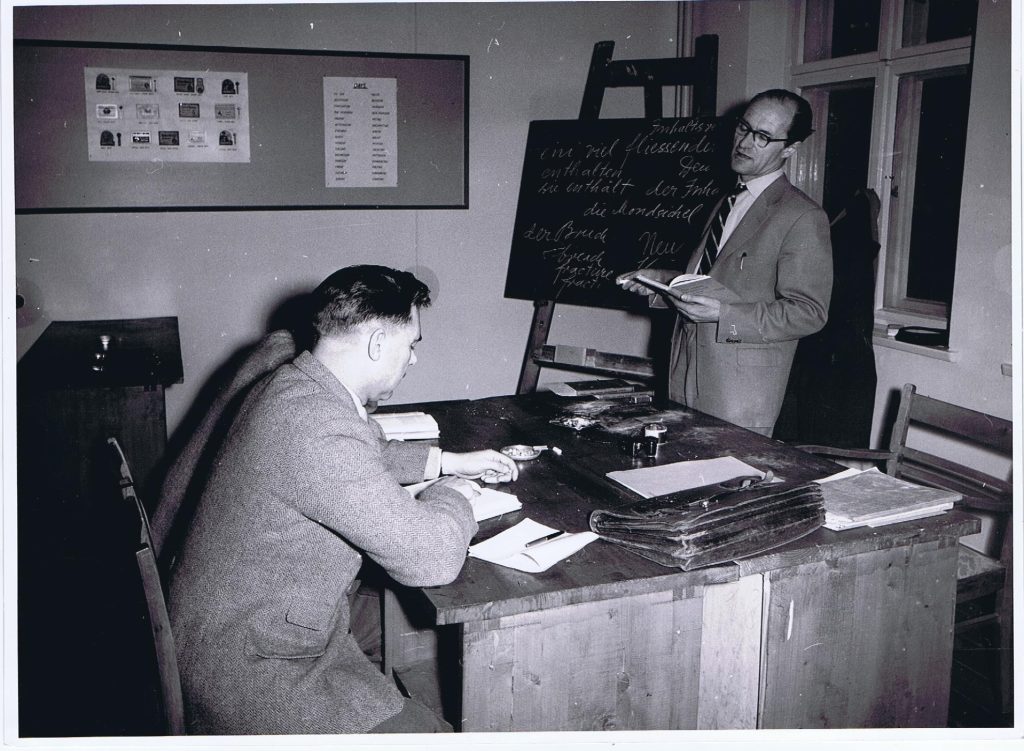
Two soldiers being taught German by an RAEC officer, BAOR, 1960s
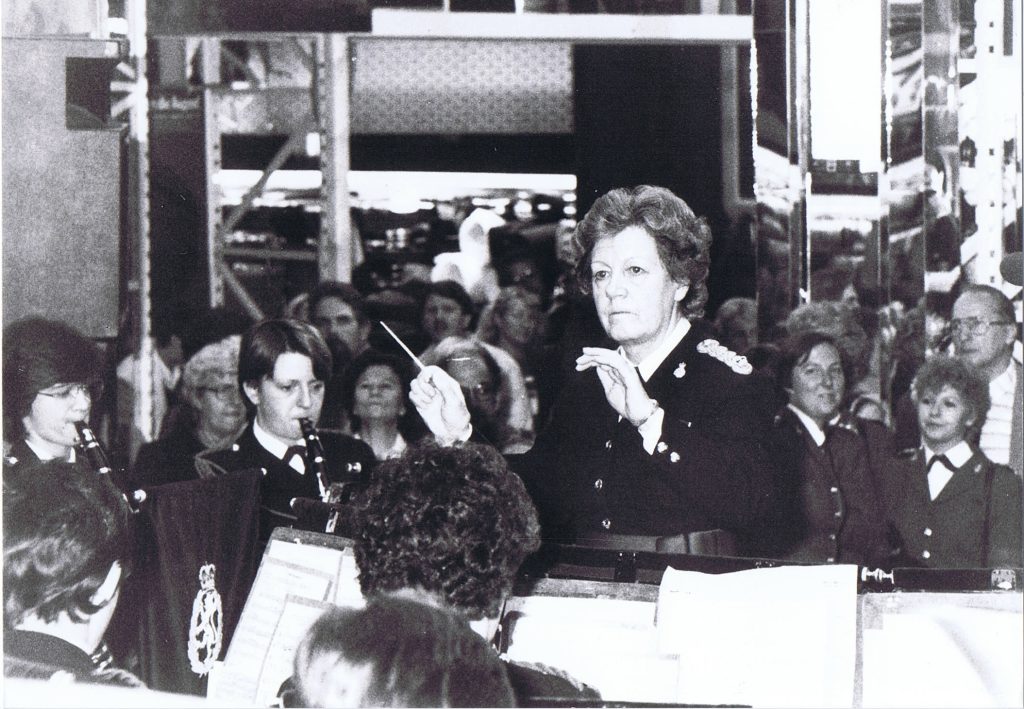
A WRAC band performing music in Berlin, c.1980s
After the Second World War the Royal Army Educational Corps (RAEC), Royal Army Pay Corps (RAPC) and Royal Military Police (RMP), amongst others like the Army Legal Corps (ALC) were stationed in Germany, forming part of the British Army of the Rhine (BAOR). Soldiers were taught German by the RAEC and were managed by the RMP to complete their roles in occupied Germany.
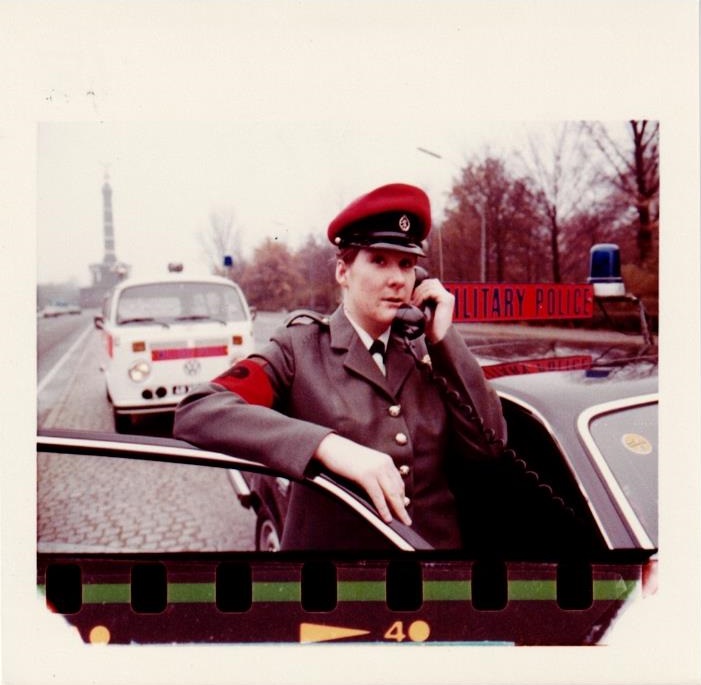
The Women’s Royal Army Corps (WRAC), who succeeded the Auxiliary Territorial Service (ATS) in 1949, were also involved in the BAOR. Their role was expanded to include over 40 different jobs, such as operating communications devices, driving military vehicles, analysing intelligence, and assisting the RMP as military police women.
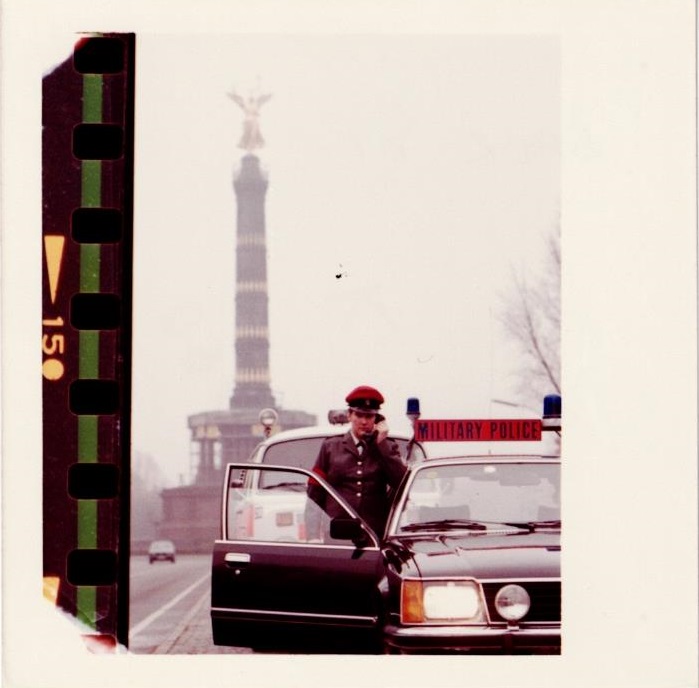
A Military Police Woman on the telephone, BAOR, 1981
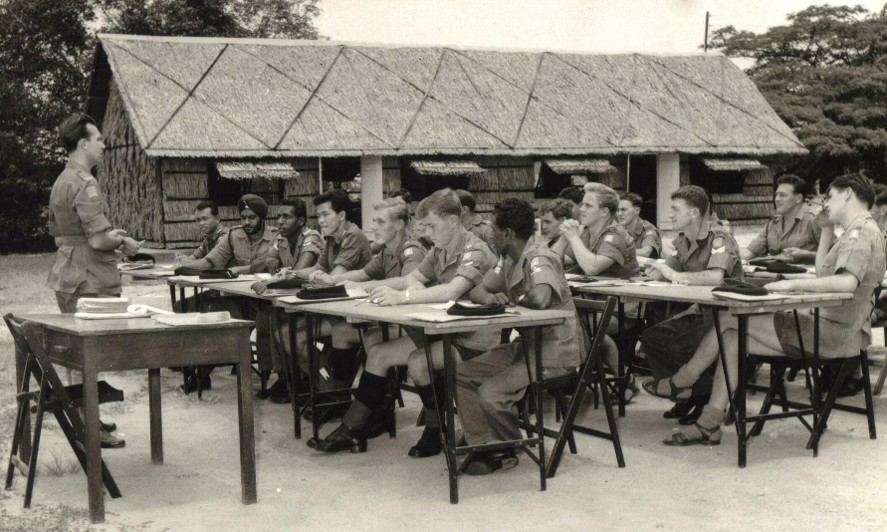
The British were also heavily involved in East Asia, holding overseas territories in many countries, including Singapore, Malaysia, and Burma (modern day Myanmar). Singapore in particular functioned as a key strategic trading base for the British in East Asia, following the end of the Second World War. Just like in Europe, the AGC antecedents played an important role in these territories. They provided support through education, pay, administration, and policing to the British soldiers stationed there.
An RAEC officer teaching an Army Certificate of Education Class, Gillman Barracks, Singapore, 1961
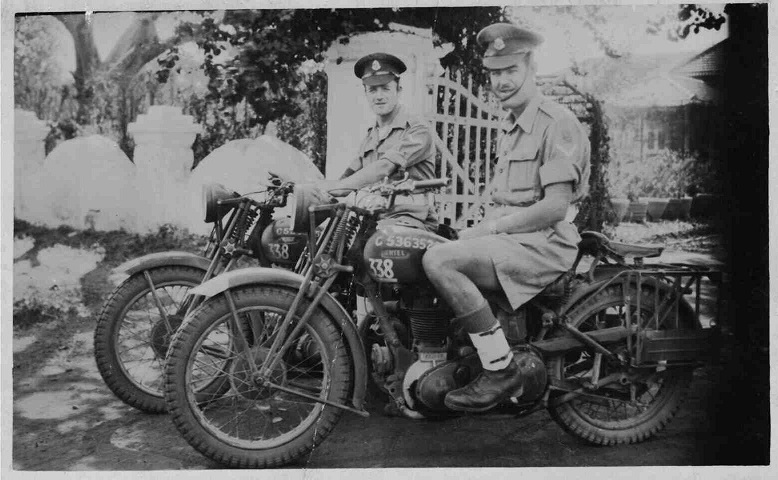
Until it’s independence in 1947, India formed a major role for British Army operations in Asia. AGC antecedents like the RMP were stationed there to not only police the soldiers serving here, but also to preserve high morale, and maintain discipline. The Corps of Military Police, India (CMP (I) ) was formed in July 1939 by the Government of British India, and was made up of British and Indian troops.
Two members of the CMP (I) on motorbikes, India, c. 1945/6 (Courtesy of the RMP Museum)
Throughout the 1940s the British Army in North Africa, from Tunisia to Egypt, worked to maintain Britain’s influence over the Mediterranean and the all-important Suez Canal. Many of the AGC’s antecedents, such as the ATS, and the Army Legal Services (ALS) worked to administrate these British forces in the Mediterranean. From areas of active conflict, to regular garrisons in local towns and cities, they covered a wide area of North Africa.
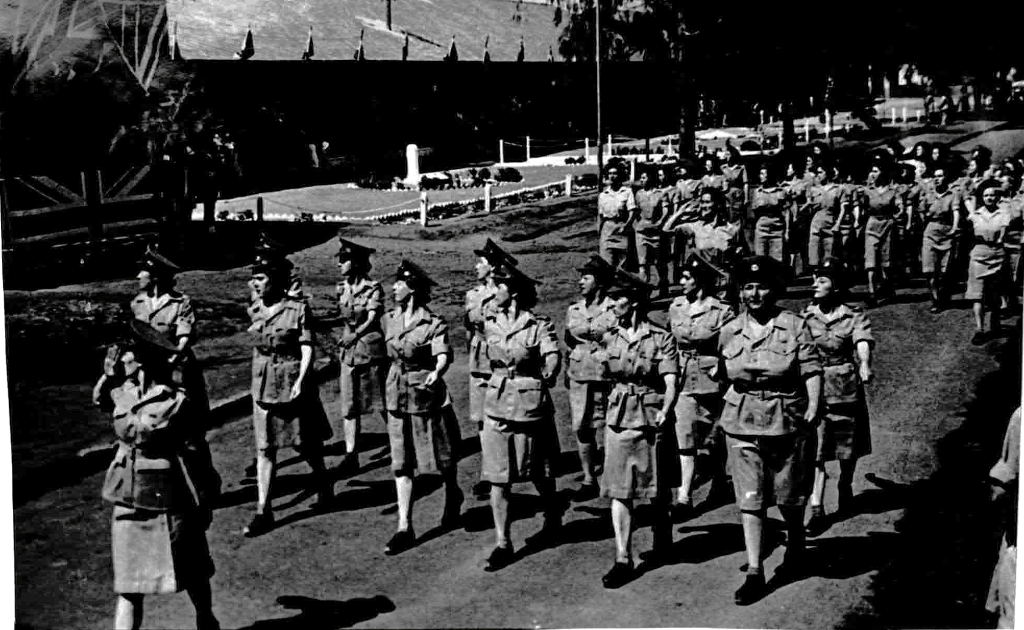
ATS soldiers marching at a victory parade, Abbassia, Cairo, June 1946
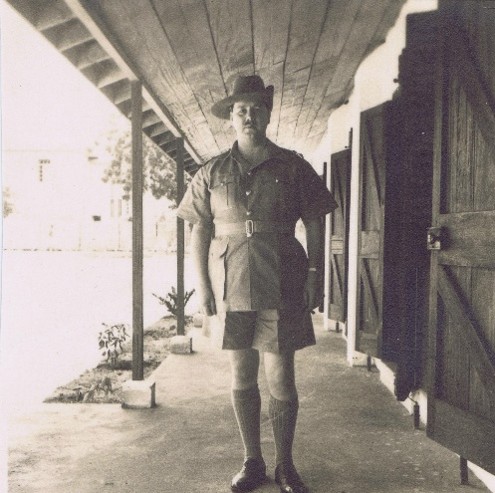
Brigadier Halse (1905-1993), then Lt.Col, somewhere in West Africa, c.1942/3
The 1950s & 60s saw an increase in former African colonies gaining independence and transitioning into self-governance. Britain gradually began to pull it’s army out of Africa, however many of the AGC antecedents remained on the continent to aid in the transitional period.
One of the most prominent figures in this period was Brigadier Richard Clarence Halse of the Army Legal Services (ALS). Halse laid the foundation for army law structures in places like Kenya, and these are still used as a foundation today.
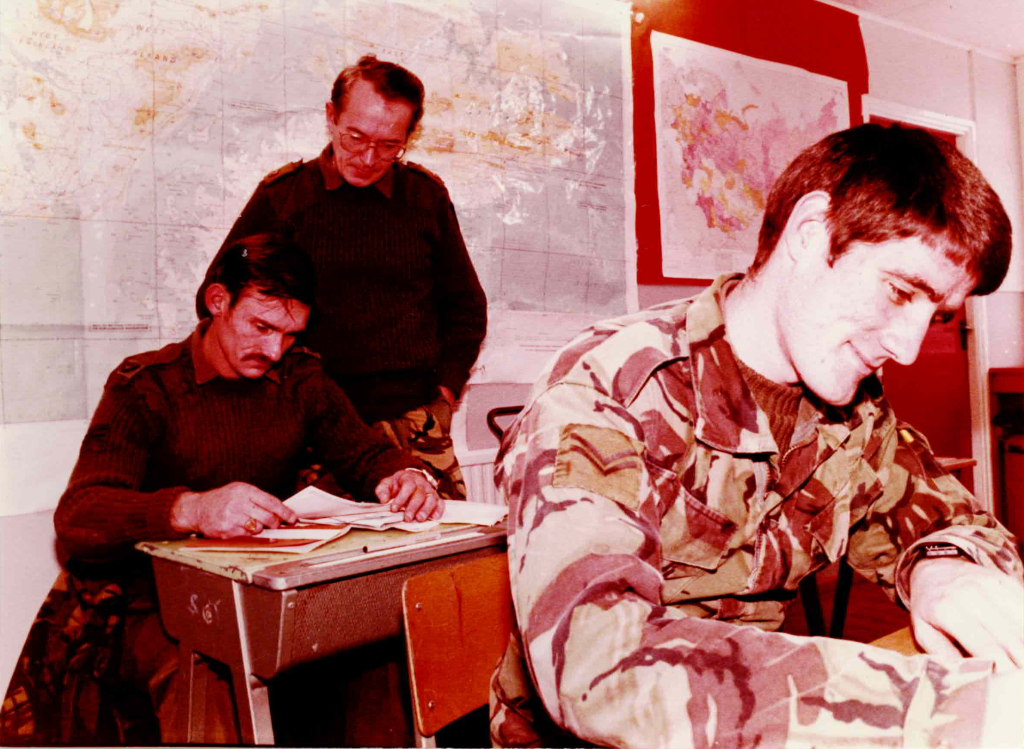
RAEC and civilians participating in a course, The Falklands, December 1982
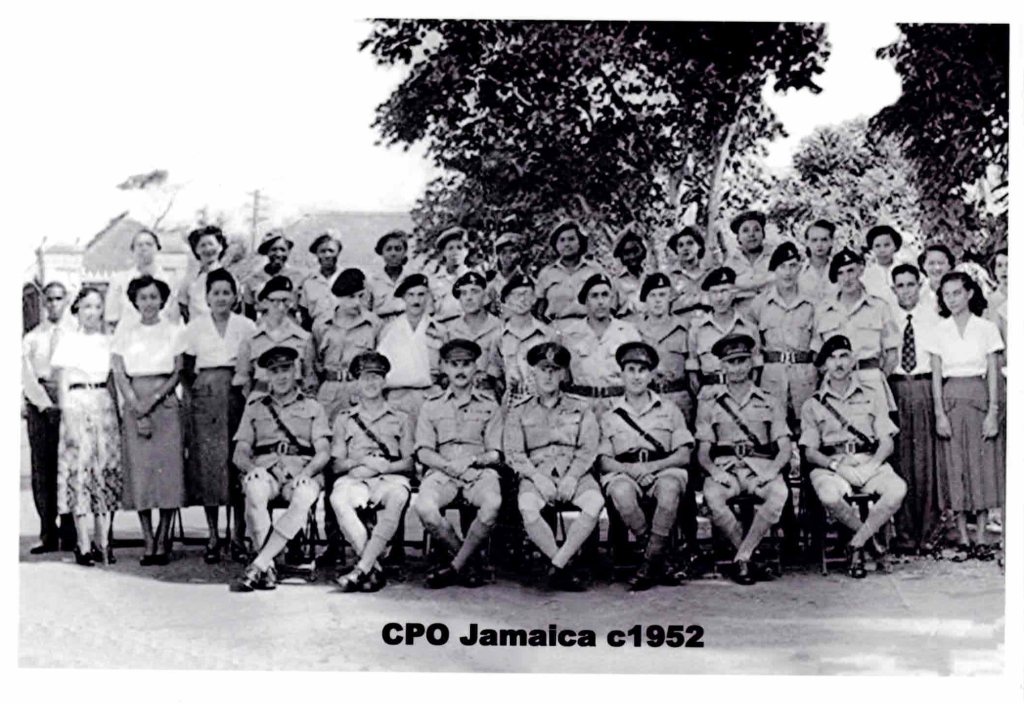
RAPC officers of the Command Pay Office (CPO) in Jamaica, c.1952
The reach of the AGC’s antecedents also extended to North and South America, with the RAEC and RAPC being stationed in British overseas territories, like The Falklands and Jamaica.
The RAEC and RAPC played a major role in Operation Cooperate during the Falklands War. RAPC personnel established a Field Record Office and a Field Cash Office. The latter played a significant role in the identification of the dead and communication between the Falklands and the UK throughout the war. This was alongside the usual pay administration of the Corps.
The RAEC worked to supply educational and entertainment support to the Army. This included supplying books, films, and board games, setting up an shop, providing educational courses, and creating daily news broadsheets. Following the end of the war, the RAEC continued to provide educational support to both serving soldiers and the island residents’ children, working alongside civilian teachers once ordinary life had returned.
Further information regarding the RAPC/RAEC in The Falklands can be found HERE.
Although the AGC does not fight on the front lines it remains an integral part of the British Armed forces. The current corps are working in active conflicts in the Middle East and the Persian Gulf, as well as on NATO operations in Estonia.
This online exhibition was researched and curated by an AGC Museum work experience volunteer.