Becoming Royal: The Army Educational Corps at War
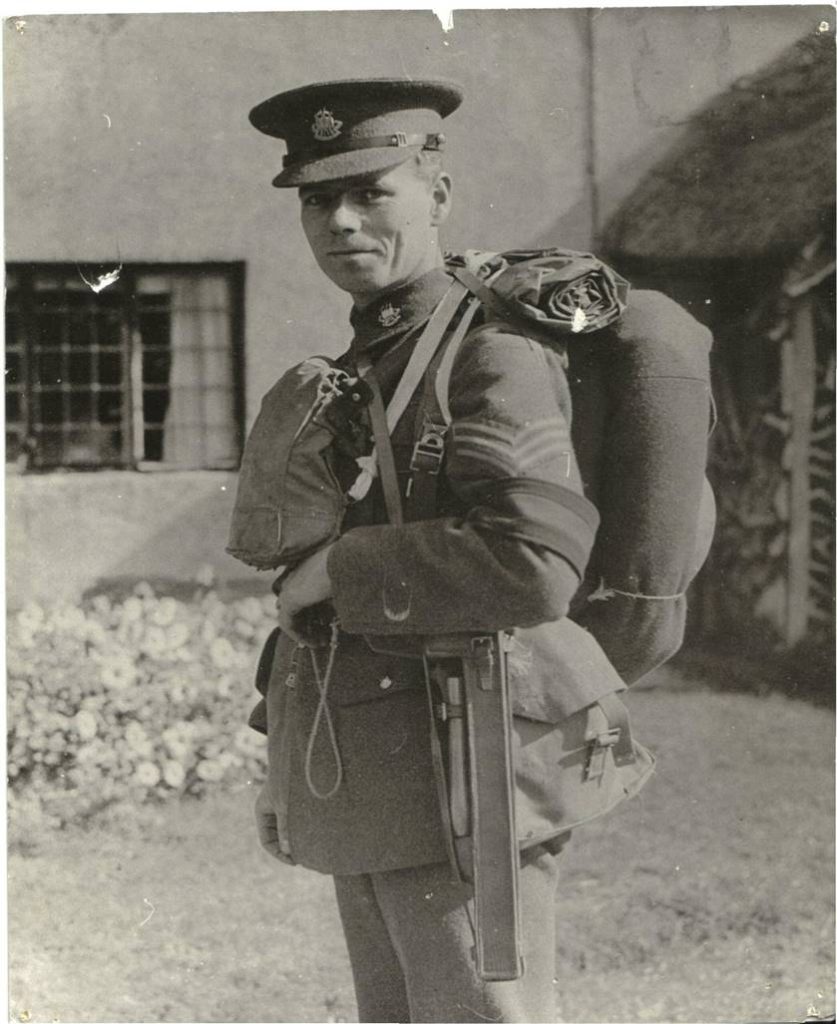
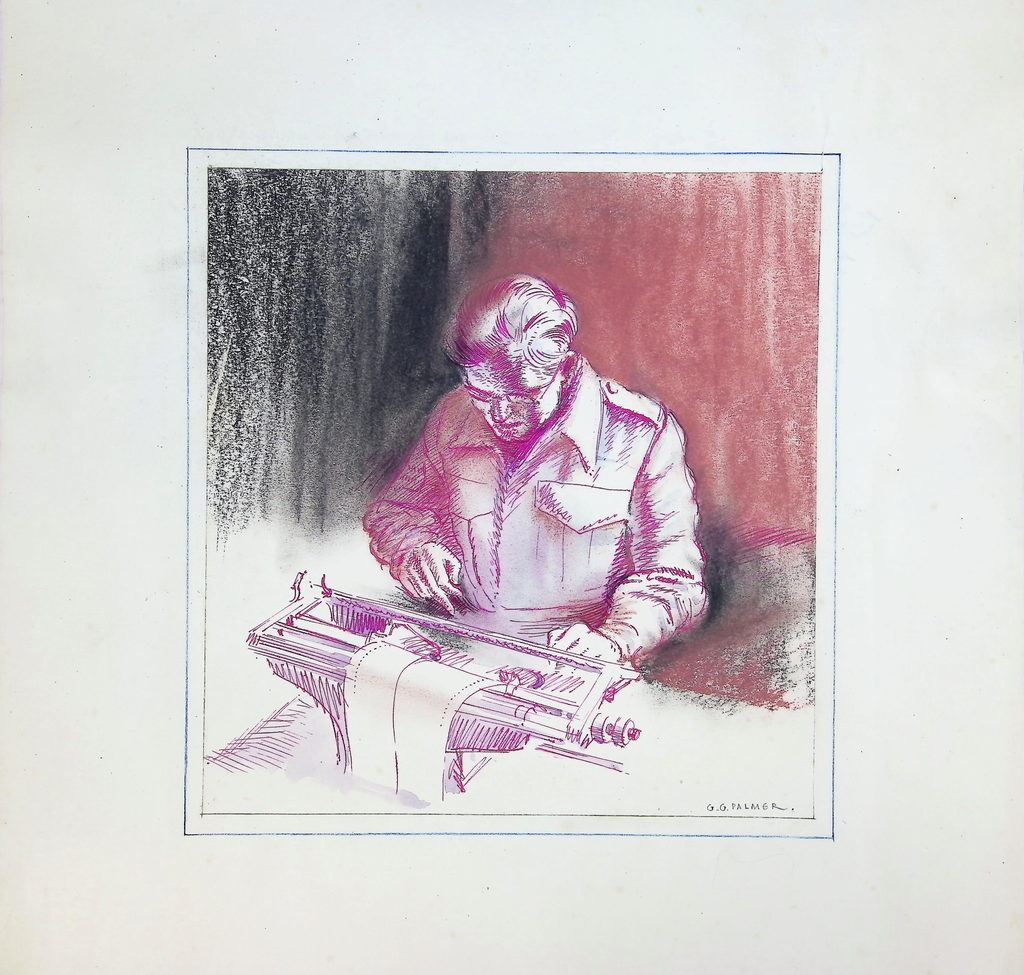
The Army Educational Corps (AEC) was formed in 1920. The initial wartime role of the AEC was to boost morale, while in peacetime instructors were involved in training and preliminary education. Abroad, the AEC developed education in the Indian Army, specifically in running training courses for Indian educators and creating language training courses and textbooks. Changes in the 1930s saw the peacetime focus shift completely to preliminary education, and the wartime role became cypher duties in headquarters.
When war was declared in September 1939, the Army Educational Corps was disbursed amongst headquarters, nearly disbanding the Corps and causing Army education to be put aside.
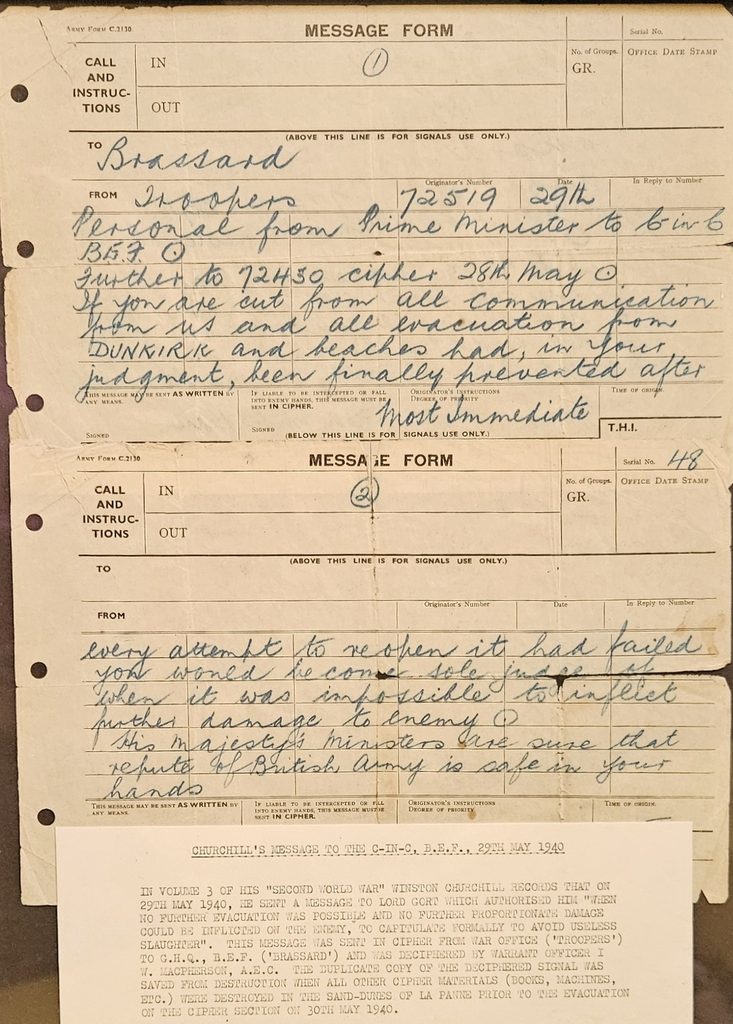
The Dunkirk evacuation changed the fortunes of Army education. With the return of a large part of the Army, several educational schemes were created to keep the average soldier occupied during downtime and furthering their education. The first was the Haining Scheme, which gave soldiers access to lectures and courses in adult education centres, local colleges, and occasionally in the field. The AEC was expanded by 400 personnel to deliver the scheme and expand the service; during the winter of 1940-41 over 11,000 talks and lectures were delivered. Correspondence and postal course schemes were introduced in 1940 and 1942, with the new War Office branch A.E.3 formed to look after both schemes.
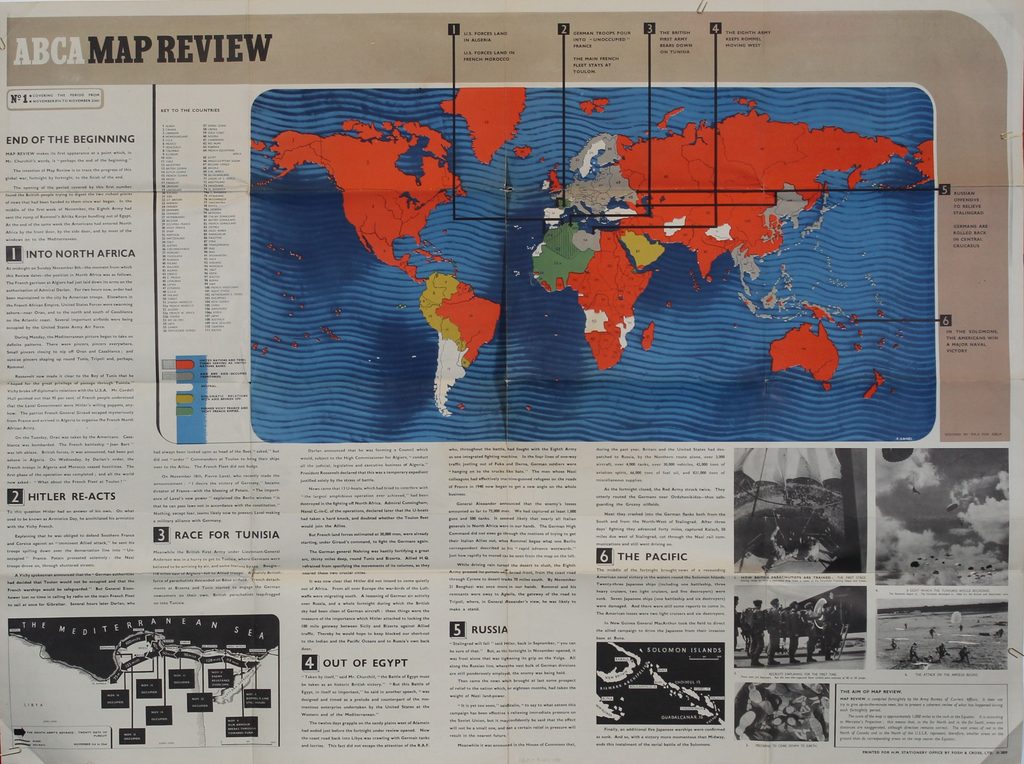
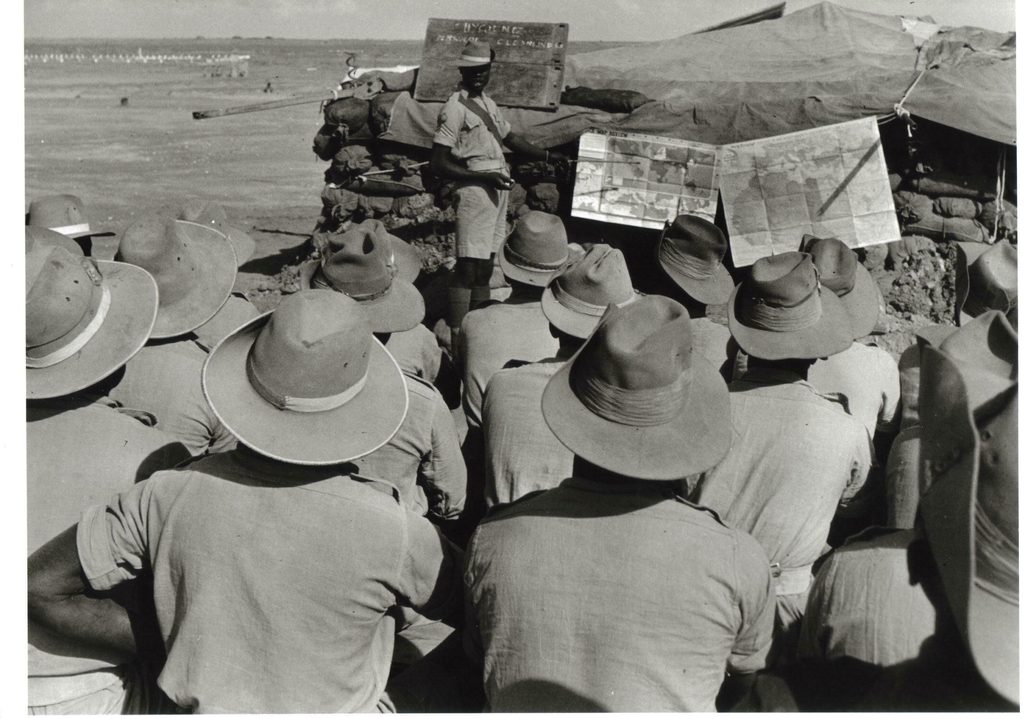
In 1941 the Army Bureau of Current Affairs (ABCA) was created. This scheme included bi-weekly publications of booklets with accompanying posters sent to units. The alternating subjects of “Current Affairs” and “War” allowed soldiers to learn about allies and enemies, current events on the various front lines, and why fighting the war was important. Unit officers were to read the booklets and then offer a lecture using the map reviews. A unit discussion then followed, allowing soldiers of all ranks to discuss the topic and their opinions on it. ABCA also produced a number of plays on various wartime topics, including What’s Wrong With the Germans which was delivered before D-Day. A separate Directorate to the AEC, they had their own staff and war correspondents attached to units. The correspondents would send the information and images back to produce the booklets and map reviews, and in some cases called for first-hand accounts from officers and soldiers in front line units.
In winter 1942 British Way and Purpose was introduced. The booklets contained information written by subject experts and were used to provide discussion points on topics related to Britain. This included democracy, law, economics, and Britain in the context of the wider world. They were incredibly popular with civilian authorities who requested copies.
Education provision, including these schemes, were provided locally across the country. Talks by civilian instructors were delivered in the field to units who requested specific topics.
The AEC posted overseas delivered the same education schemes, in addition to “morale boosting activities”. In 1941, unit newssheets were trialled with the 8th Army in North Africa; considered successful, the scheme was extended to other units and theatres. The Central Mediterranean Force (CMF) proved to be an important testing ground for the provision of education in areas of operation. The theatre had specific challenges, including the siege of Malta, the mobile nature of the front lines in North Africa, and the landings in Algiers, Sicily, and Italy.
By mid-1940 it was acknowledged that education was central to morale and to maintaining discipline in the CMF. The Siege of Malta (1940-42) proved the importance of the AEC and its work. Between air raids the Corps provided a broadcasting service of news, talks, plays, and held competitions for troops and civilians in an effort to keep up morale. Evening classes were requested and provided where possible, and an arts and crafts exhibition was held after the bombing had ended. Before 1940 many families accompanied the men posted to Malta, and education provision for their children was continued during the siege when possible. The Queen’s Army Schoolmistresses (QAS), responsible for teaching soldiers’ children, kept three Army Children’s Schools open throughout the siege, and two schoolmistresses were decorated for gallantry.
The AEC also worked to reduce illiteracy among Maltese soldiers, providing English lessons and broader education. Instructors arranged graduated classes- company, battery, and then a Command Central School. This work reduced illiteracy rates by 40%.
A Middle East School of Education ‘opened’ in North Africa in June 1942. It had no location due to the constant changes to the front line location. Instead of soldiers travelling to the school, the school travelled to the soldiers. The staff of four AEC delivered training courses and lecture tours, including to the 8th Army just before El Alamein. The school later specialised in demonstrating discussion group methods, homemade visual aids, and Information Room layouts.
Major J.S. Bishop was attached to the 8th Army as an experiment. Posted to Derna, he provided recreational education and topical talks, sometimes to men returning straight from battle. As news was scarce, it was an opportunity to provide news from the UK and North Africa.
Small education centres were opened at Tobruk and Benghazi, but again the mobility of the front lines limited their success until the occupation of Tripoli. The Union Club in Tripoli offered lectures, classes, music, and a lending library.
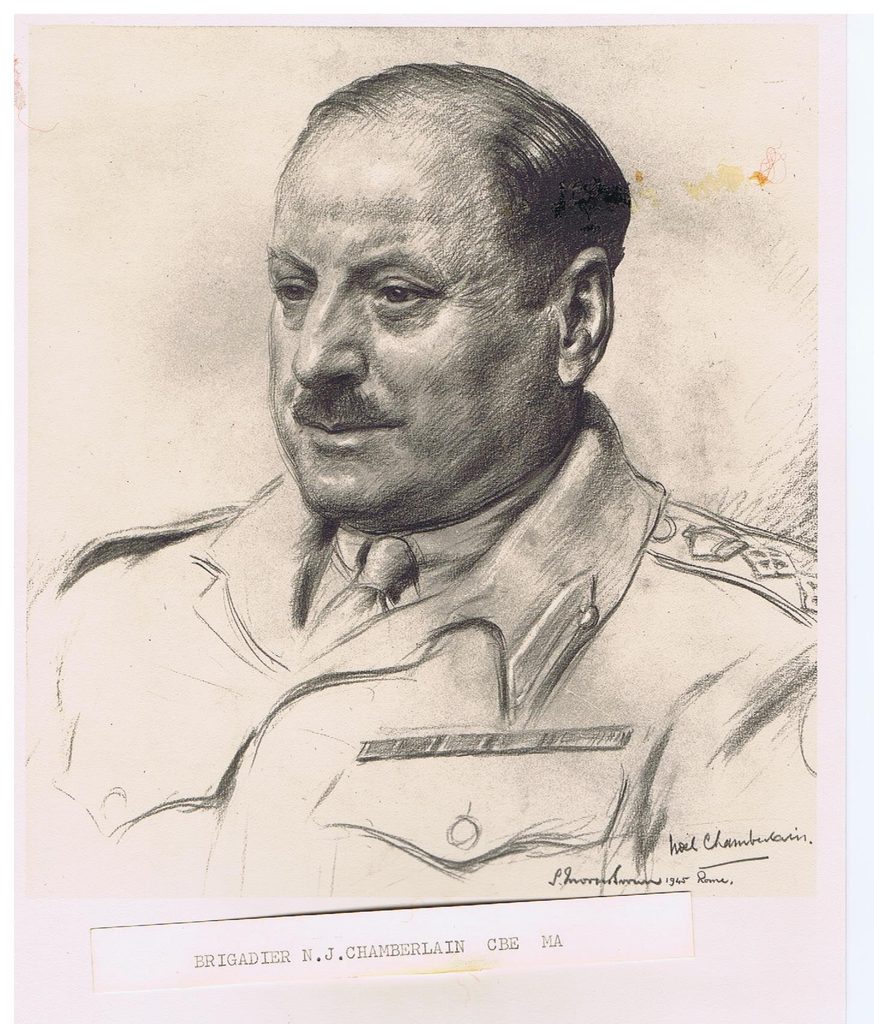
In 1943 five officers and forty-three instructors landed at Algiers as part of the invasion force. They had no clerical support and a vehicle establishment of four bicycles. The Command Education Officer, Colonel Chamberlain, had no written instructions. He decided to use the AEC as an Information Service and to provide education for static troops, hospitals, and Military Corrective Establishments. Eight instructors were divided into two mobile teams, using captured vehicles to travel 48,000 square miles to reach the 300,000 troops of the 1st and 8th Armies. On average the teams delivered forty talks and recorded music recitals a week, living on their own rations and driving and repairing their own vehicles. In eleven weeks, 538 talks were provided, with many soldiers having not seen or heard any news since the landing in Algiers. In hospitals and convalescent depots, the Corps organised news talks, lectures, music, and handicrafts. Visits were arranged and guides provided to local ancient and modern sites to units who had the time available. By October 1943 there was a Staff Officer (Education) in each headquarters down to Area Headquarters, an instructor to each 5,000 men, and more transport for the mobile teams.
The Stalin-Sikorski agreement meant the arrival of 100,000 Polish troops to Persia in 1941. In 1943 a cadre of AEC instructors in Paiforce (Persia and Iraq Force) were nominated to train Polish units for new duties, working with the British Council. The English Language Instruction Pool (ELIP) was created to give units a grounding in phonetics and a direct method of language teaching. ELIP staff arriving in Italy joined the AEC and were employed with their Polish counterparts. The first students were staff officers, adjutants, signalers, and military policemen whose duties brought them into contact with British forces; the British Council supplied periodicals and libraries. The desire for language learning is shown through the 3rd Carpathian Division, who passed a set of English exams to GCE standards a few days before the battle of Cassino.
After the invasion of Sicily, education was provided when there was opportunity. There were study centres in Messina, Catania, Syracuse and, in partnership with the Royal Navy, in Augusta. An Italian guide was published and sold 15,000 copies. The high demand for music was met through the Catania Opera House, even though there was a lack of sheet music available. In other areas there was a reliance on small ensembles and recorded music. The Institute of Vulcanology and the staff of the Etna Observatories gave lectures, with weekly parties arranged to climb Mount Etna.
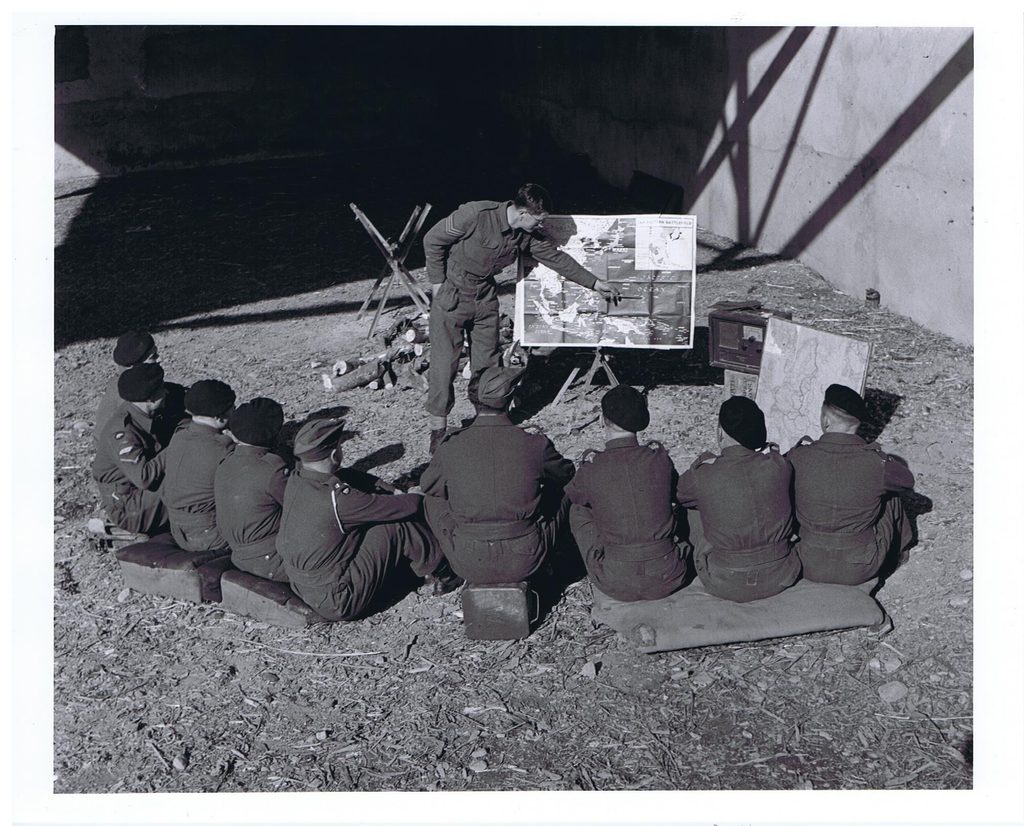
ABCA in the Field, c. 1943. C. IWM
During the Italian Campaign, the AEC with 10th Corps was given the specific task of touring the forward troops held up in the hills around Naples. They explained the military situation in Italy using intelligence reports and discussed the war in more general terms. An AEC Warrant Officer’s diary records his typical work week:
“WED: Little movement possible by day, but got fifty-five men very interested, under a hedge.
THUR: Waited until troops had finished firing on enemy positions and talked to twenty-eight men.
FRI: Discussion groups with gun crews in intervals of firing, in heavy rain.
SAT: Guided through mine field, visited three gunsites, all within German shelling range.”
The Signals fitted a 10-CWT truck with a radiogram to provide education, although it competed with the sound of gunfire. Once transport improved the AEC were able to reach more areas of active fighting to provide education. By winter 1943, 200,000 troops were in the Lines of Communication in southern Italy, all requiring off-duty entertainment and education. This was done with ABCA background courses held in cinemas, and symphony concerts and operas performed twice a week in the Bari Opera house. A gramophone mounted on a lorry brought music to the countryside around Naples.
The lessons learned in the CMF directly shaped education and recreation provision for 21st Army Group, with Colonel Archie White VC serving as its Chief Education Officer. In the ten weeks leading up to D-Day the Army was sequestered in sealed marshalling areas. The Army Educational Corps in these areas supported welfare and morale, including arranging recreation rooms, games, sing-songs, concerts, topical talks and discussions, and colloquial language classes. They also helped to find and supply beer and to organise baths for the men. Before the invasion, each soldier was given a Penguin book to go in his haversack, light enough that it wouldn’t upset the load balance of their kit. The AEC also taught colloquial French and German to the military police attached to the formations.

After the landings, AEC personnel were tasked with providing unit newsletters, education schemes, and other morale-boosting activities. 21st Army Group had 134 AEC attached to serve in front line units, hospitals, depots, and detention camps. By D+3 AEC personnel began to arrive in teams of an officer, an instructor, a clerk, and a driver.
Any unwanted Penguin books were collected for use in unit libraries, and newssheets were produced within hours of the first teams arriving. The first broadsheet, The Triangle for 3rd Division, was produced on D+3. A day or two later a team member was killed, the education officer was injured and some equipment destroyed- however there were no breaks in production. By D+5 there were three more papers- Spearhead (1st Corps), Corps Courier (30th Corps) and Pegasus Goes To It (6th Airborne Division). Each formation had a bivouac tent and a truck lit by pressure lamps with a radio, a typewriter, and a duplicator. Work started at dusk. The sheets included local history and typography, a bit of humour, items from the BBC midnight broadcast, and the latest news on the front. Printing took place between 2am and 4am, and in the early morning Signals, Supply Units and the AEC did the “paper rounds”.
Once the beaches were secured, the AEC could then turn to their second duty, to “provide quiet places where the soldier might read, or write to his people, or to join others in study”. The first study centre was at Arromanches beach. Second Army Rest Camp was larger, housed in a barn with maps, reading desks, an artists’ corner and a poet’s corner. Members of the Corps were found in reinforcement holding units, with study centres concealed in the woods or half-wrecked German camps. Later in the campaign, study centres were in small hotels or town mansions. The larger centres had facilities for studying art, music, handicrafts and commerce, with local civilians teaching languages. Each study centre started with a 500-volume library, and Army Group reserves provided enough books that four of the Corps and Divisions in the forward area were able to have mobile libraries on tour in converted German lorries. The Education Centre in Antwerp was destroyed by a V-2 rocket, however there were no casualties amongst the Corps or the students.
For captured service personnel, most POW camps had education schemes established by qualified or enthusiastic tutors. The Red Cross arranged for books and exams to be sent to North-West Europe and papers returned for marking.
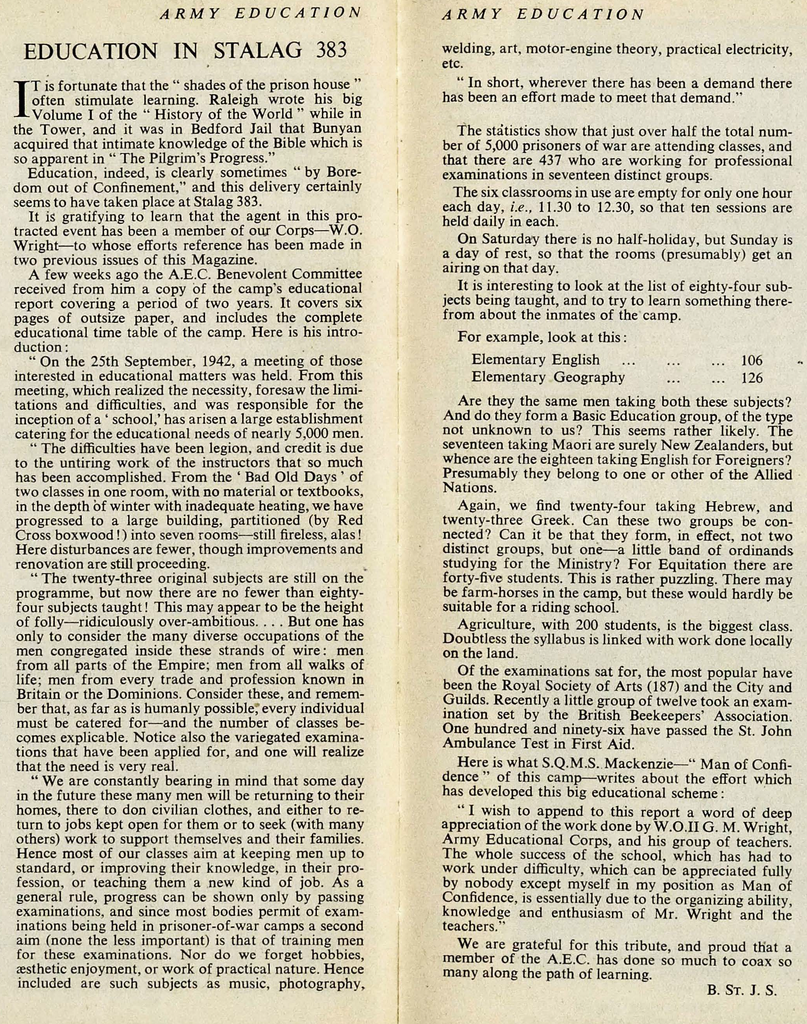
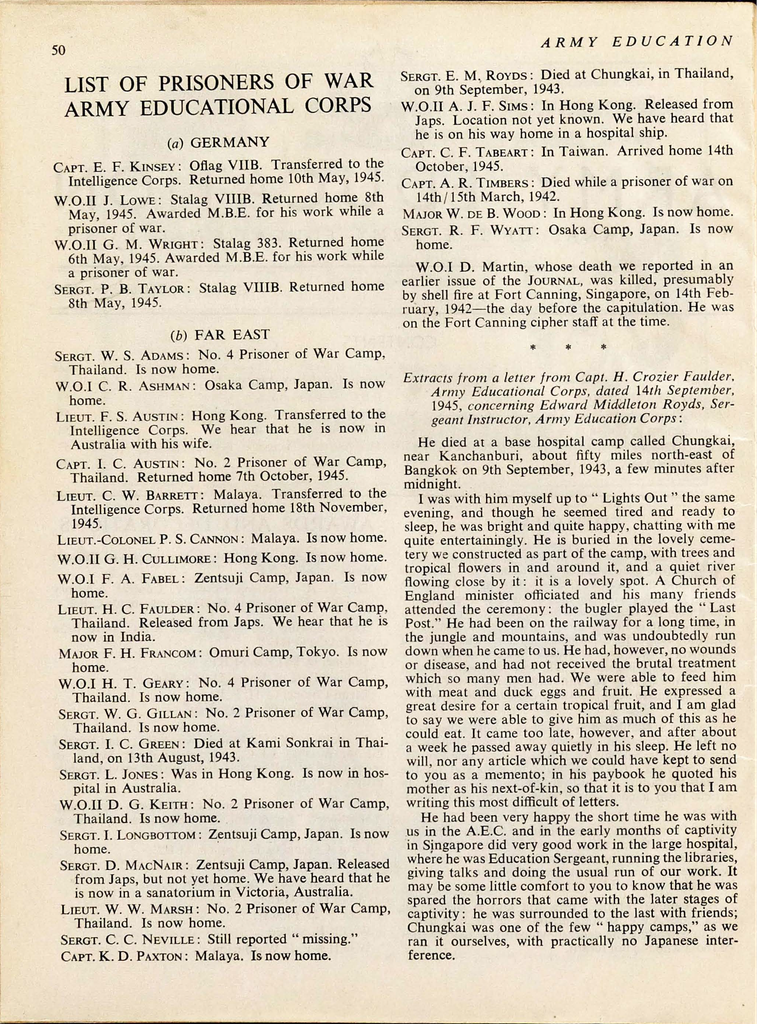
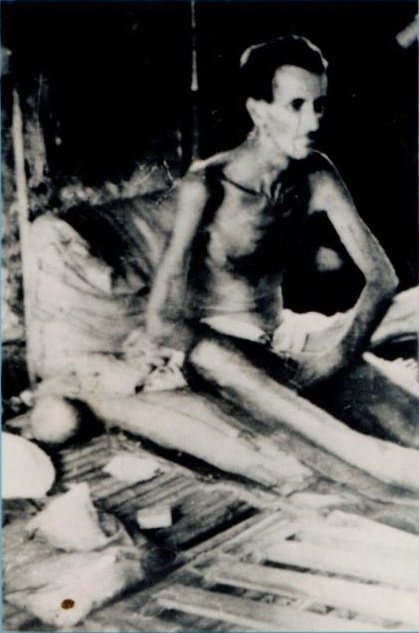
After the capture of Hong Kong, Singapore, and Malaya in 1941, prisoners at Shamshuipo Camp (near Hong Kong) and at Changi (outside of Singapore) set up education schemes, and faculty of Changi University and members of the AEC established a university. The university ran until 1943, when numbers dropped due to Burma Railway drafts and the movement of POWs across South East Asia. Several AEC POWs kept records of their imprisonment, providing information on the Japanese treatment of POWs in war crimes trials after the war. WO1 Fabel, an AEC Instructor, was captured in the fall of Hong Kong and taken to Hiroshima 5B- Innoshima Camp to work in the shipyard after his initial internment at Shamshuipo. As a senior NCO, Fabel was in charge of a section and kept a record of his imprisonment and the men under his care. In the same POW camp was Sgt Instructor I. Longbottom, whose medals we hold in the collection. Captain I.C. Austin, pictured here, was a POW in Thailand and had worked on the Burma Railway.
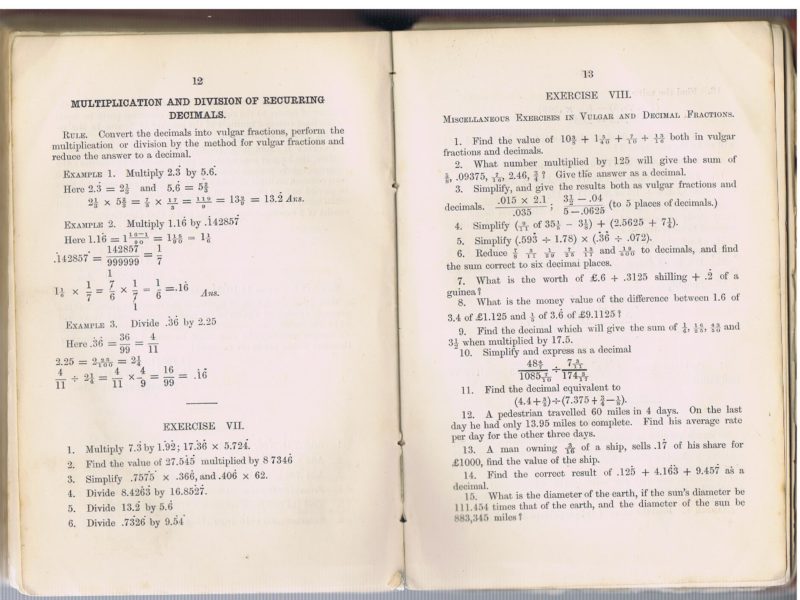
With the end of the war thought to be approaching, the AEC began planning for the release of servicemen and women back into civilian life. This led to the development of the Release Period Scheme and the publication of Return to Civvy Street in October 1944. The Release Period Scheme included six months of four to six hours of instruction per week with advice given by unit education officers. The scheme for the British Army included training for all with a choice of subjects within six curricula, providing over 130 courses. Servicewomen were only allowed to take courses in one syllabus, Home and Health.
Although at the end of 1944 the Release Period Scheme started, operational needs still had to be met. Every town in the theatres of operation had its own education centre to support the various schemes. The capture of Rome in June 1944 created a major opportunity for the AEC. The Corps provided an Information Marquee overlooking the Colosseum, which included pamphlets and guides. Maps, diagrams, and posters were displayed around Rome to show the history of the city. A guide service was developed into a seven-day course at the University of Rome, where over 1,000 students attended courses on the historical background of Roman civilization.
In the CMF Area a ‘Health Week’ was run by the AEC and Royal Army Medical Corps (RAMC) before the malarial season began. Exhibitions and brain trusts were organised, with pamphlets and talks delivered to 10,000 soldiers. Army newspapers provided current events information, and the mobile education teams turned to the topic of post-war reconstruction. With a reliable postal system established, correspondence courses were organised and expanded rapidly; there were 600 applications a day. From June 1944 regular exams were held throughout the CMF for London matriculation and later for London intermediate degrees, the awards of the City and Guilds Institute, and the Institute of Chartered Accountants.
Fifteen Formation Colleges were established to provide practical and academic instruction in a wide variety of locations; from former camps to mansions and established universities. The work of the colleges was supported by BBC broadcasts and correspondence courses.
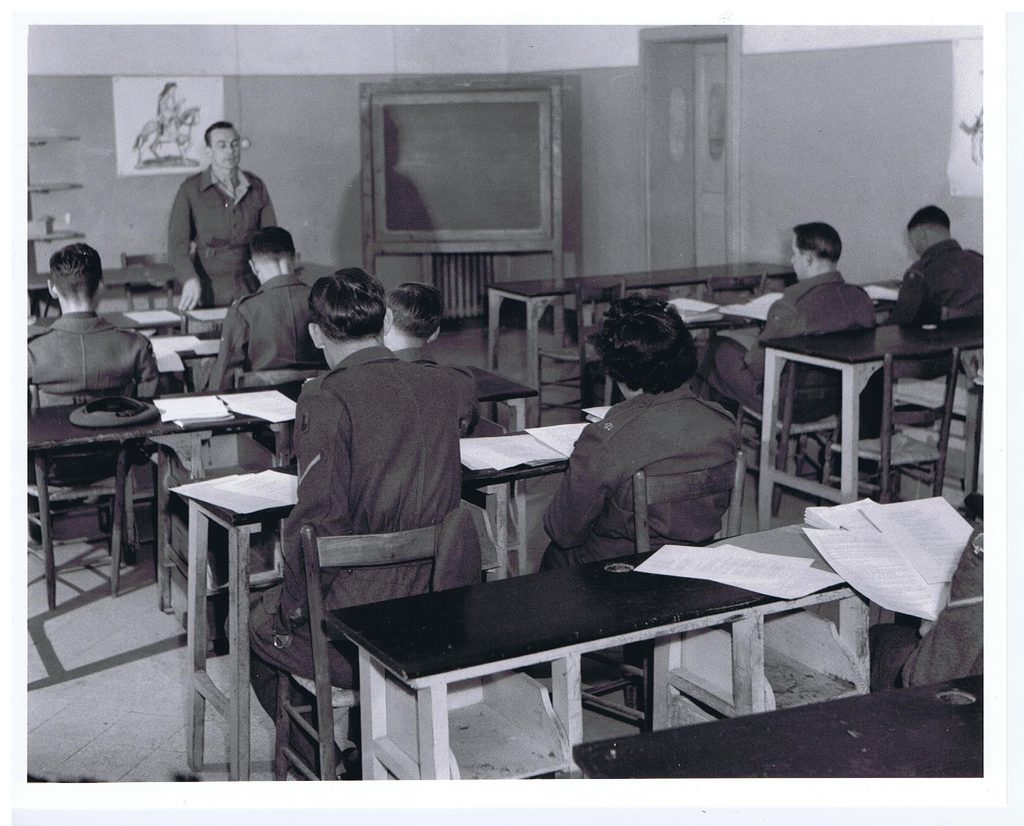
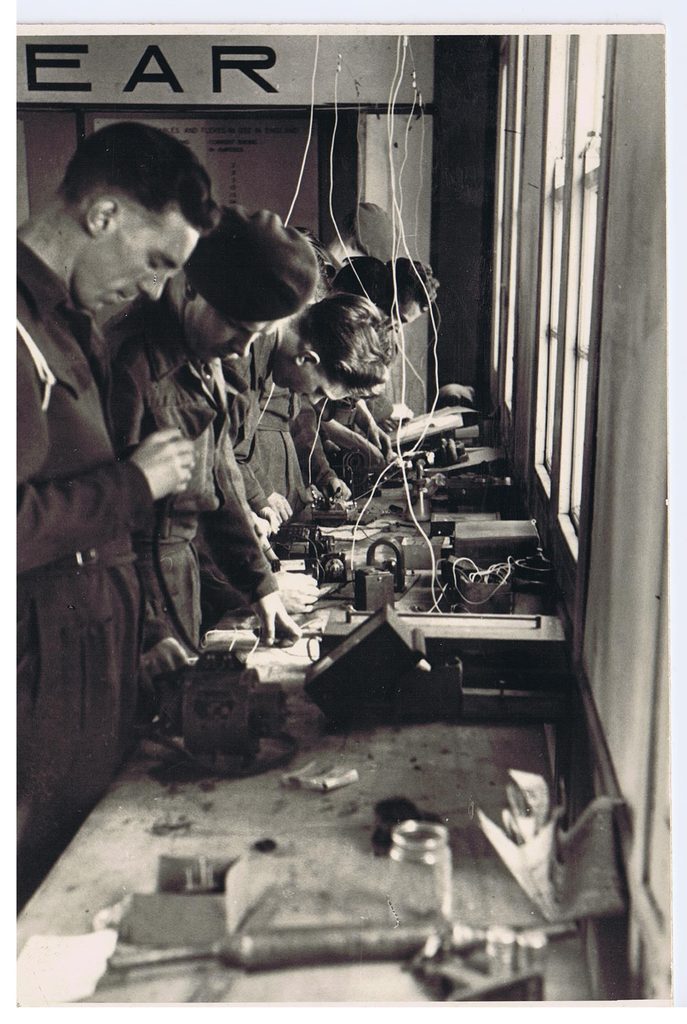
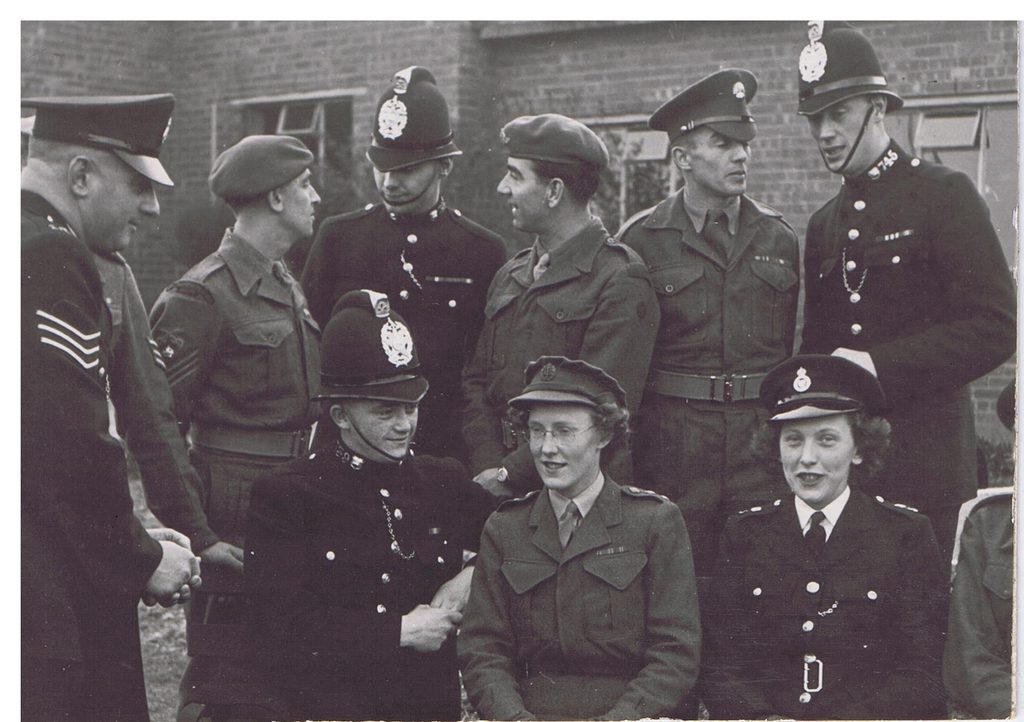
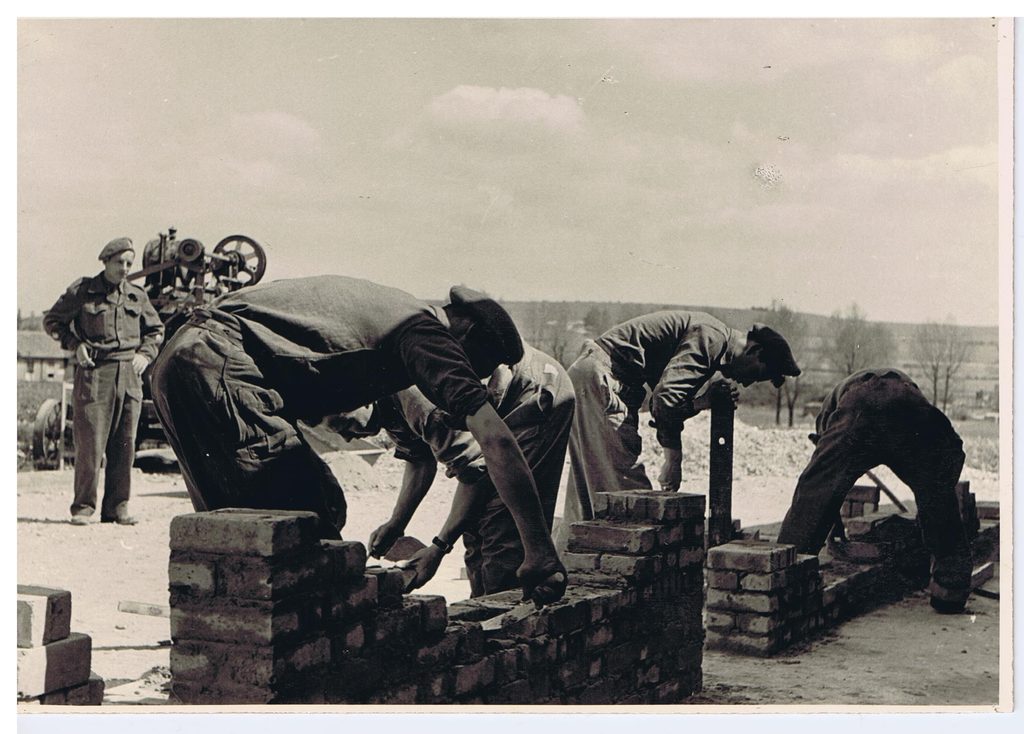
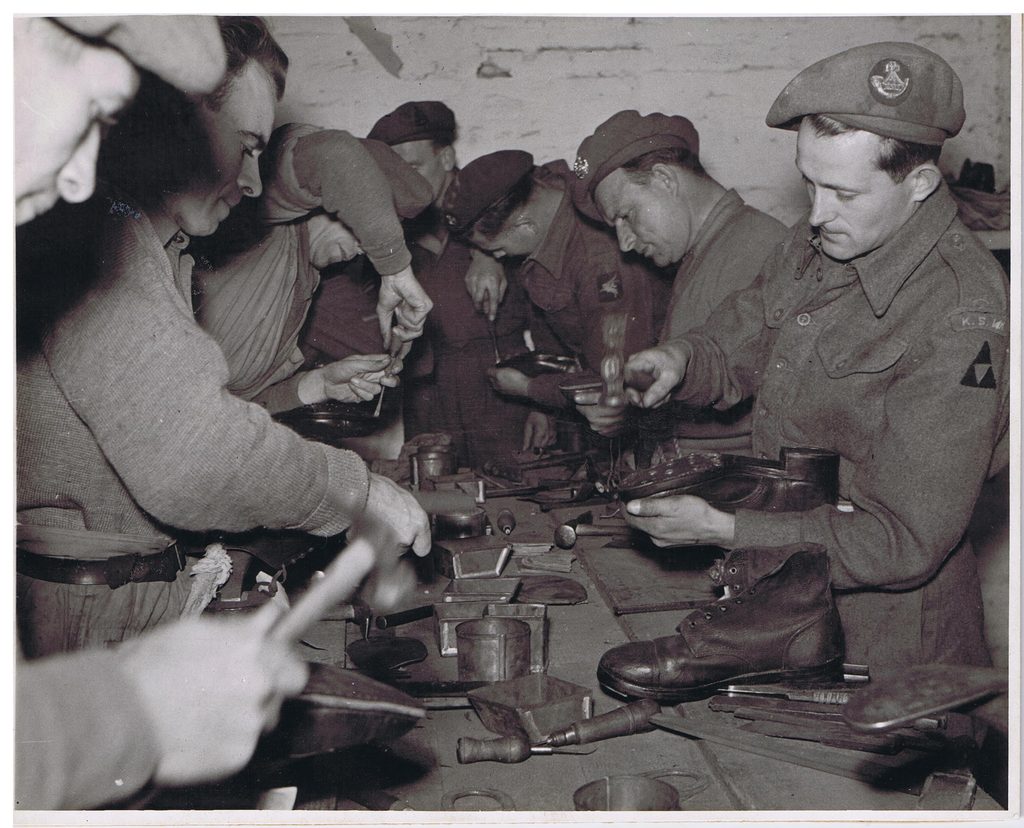
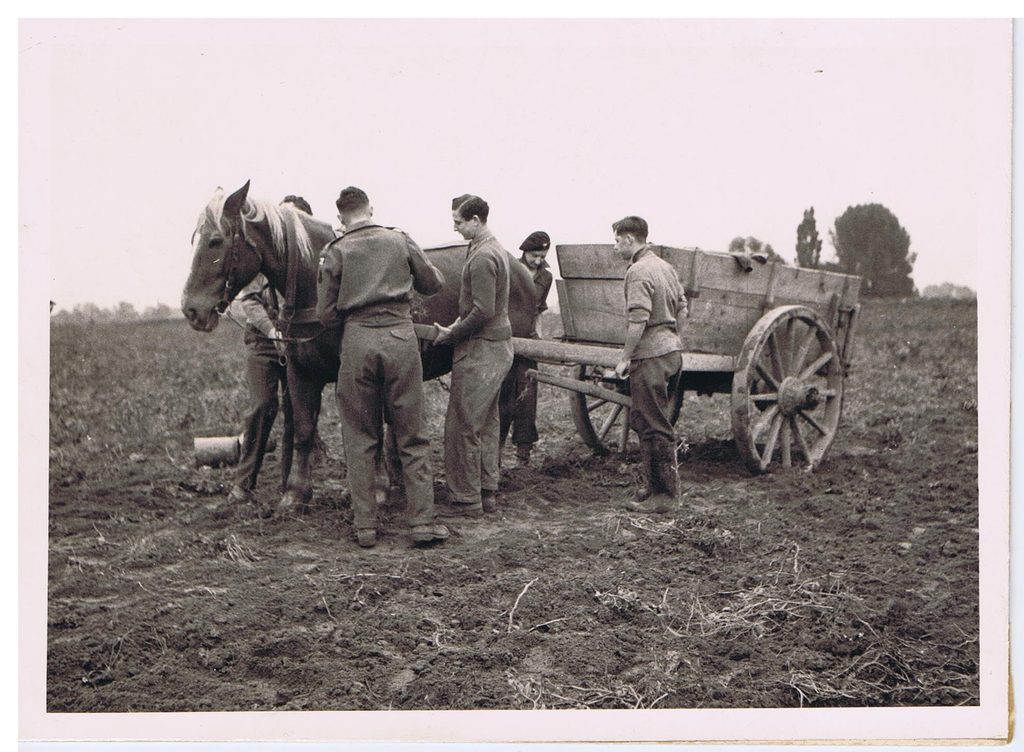
The AEC also worked with Displaced Persons, helping those who did not wish to return home to settle in Britain. African and Indian troops could also take part in the Release Period Scheme, although this was created to fulfil the specific needs and training of the men.
For Indian troops, training and welfare could not be arranged locally without the agreement of the Indian government. In Cairo, the General Headquarters of Middle East Forces had the appropriate branch of staff, but by spring 1944 it was clear that a separate Mediterranean establishment was needed. There were only twelve officers and two Viceroy’s Commissioned Officers for 150,000 troops. Discussions with Indian Army troops showed a need to concentrate on literacy and village uplift. Instructors, however, did not arrive until 1945, at which point most troops were returning home. Exams for certificates were held at all stations, with courses on agriculture and rural reform delivered in every brigade and centrally in Florence. Soldiers could tour model farms near Venice, and specially written Roman Urdu guidebooks were produced.
African troops also had their own education schemes throughout the war. A small party of instructors taught English, later adding classes on agriculture, hygiene, and current affairs. With the help of Italian instructors, schools of handicraft and building were established. These courses were the basis for the post-war resettlement training for Colonial and Dominion troops.
The Army Educational Corps undertook a wide range of work, often with little guidance, support, or materials. In his handwritten, contemporary report, W.E. Williams gives his honest opinion.
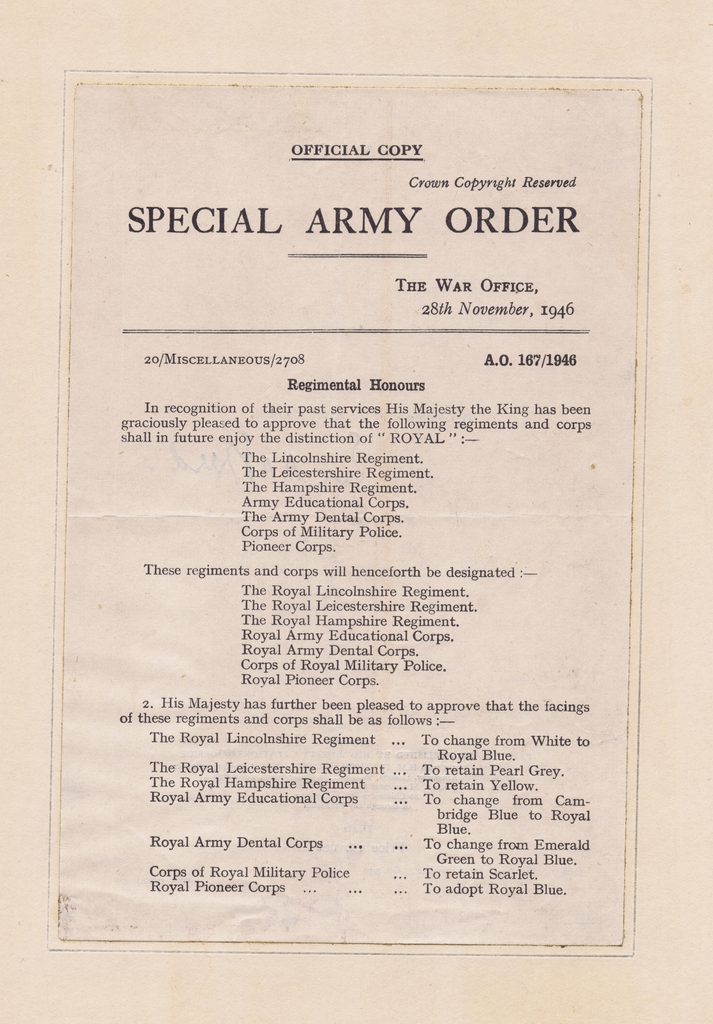
The work undertaken by the Army Educational Corps between 1941 and 1945 was wide-ranging and took place in every area where there were British, Commonwealth, Colonial, and Dominion troops. From education for resettlement, to keeping up the morale of fighting troops, members of the Corps worked tirelessly to support servicemen and women. Occasionally in danger, and sometimes making the ultimate sacrifice, their work was recognised with the granting of the prefix ”Royal” on 28th November 1946.